The Blushing Emoji is compact, but its tone and technical use change with words, relationships, platforms, and nearby symbols. This article explains the subject in practical terms so the character can be used clearly in messages, profiles, websites, and visual designs.
The visual difference
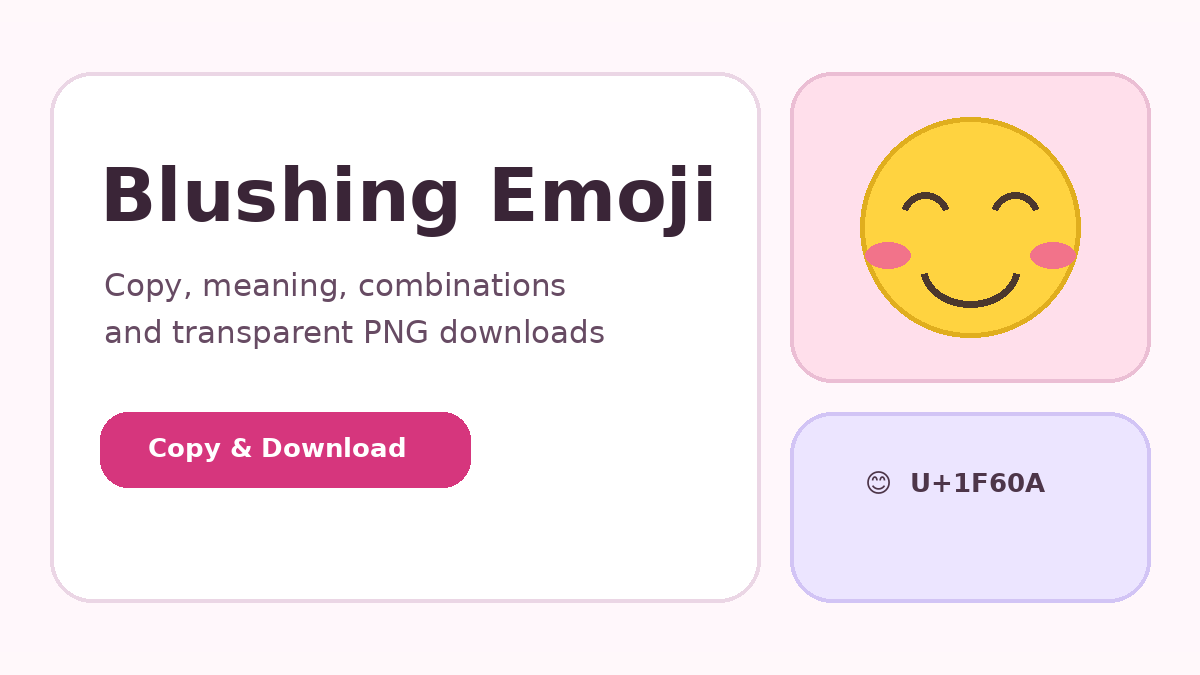
😊 has smiling eyes, a closed smile, and rosy cheeks. 🙂 uses a smaller, simpler smile with open eyes. Both are positive, but the Blushing Emoji carries more warmth and emotional color. The simple smiling face can feel polite, neutral, or restrained, while 😊 more often feels appreciative, pleased, shy, or gently affectionate.
Warmth and emotional intensity
Choose 😊 when you want the reader to notice genuine warmth after a compliment, kind favor, thank-you, or personal message. Choose 🙂 when you want basic friendliness without adding much emotion. Neither face communicates extreme excitement; for a highly energetic reaction, 😄, 🤩, or 🎉 may fit better.
Professional communication
In a workplace chat, 🙂 can provide a simple friendly acknowledgment. 😊 can make a message more personal and appreciative, but it may be too warm for highly formal or sensitive communication. A supportive team message or customer thank-you can use 😊 comfortably, while legal notices, complaints, and policy statements are usually clearer without emojis.
Passive-aggressive readings
Both faces can sound sarcastic when they follow negative words. 🙂 is sometimes interpreted as restrained or tense in online communities, and 😊 can also feel passive-aggressive when a cheerful expression conflicts with a cold sentence. Words such as “Fine,” “Sure,” or “Do whatever you want” need extra clarity because either smile may increase ambiguity.
Friendship, romance, and context
😊 is more likely to be read as affectionate or bashful, particularly beside hearts or compliments. 🙂 normally remains more neutral, which is useful when you want to avoid implying romantic interest. Context can override the general difference: close friends may use either casually, while a romantic conversation can make even a simple smile feel affectionate.
A quick decision rule
Use 😊 for warm gratitude, shy pleasure, kindness, and gentle affection. Use 🙂 for calm acknowledgment, basic friendliness, and neutral positivity. Use plain text when the message must be precise and emotionally unambiguous. The best choice is the one that supports both your wording and your relationship with the reader.
Copy and download the emoji
Use the controls below to copy the Unicode character or create a transparent PNG directly in your browser. The PNG is generated with Canvas, uses the emoji font available on your device, and does not require a server or external image link.
Final takeaway
The most reliable approach is to match the emoji, words, platform, and audience. Keep decorative use readable, test technical values in the destination environment, and choose a simpler expression when precision matters more than emotional tone.